|
|
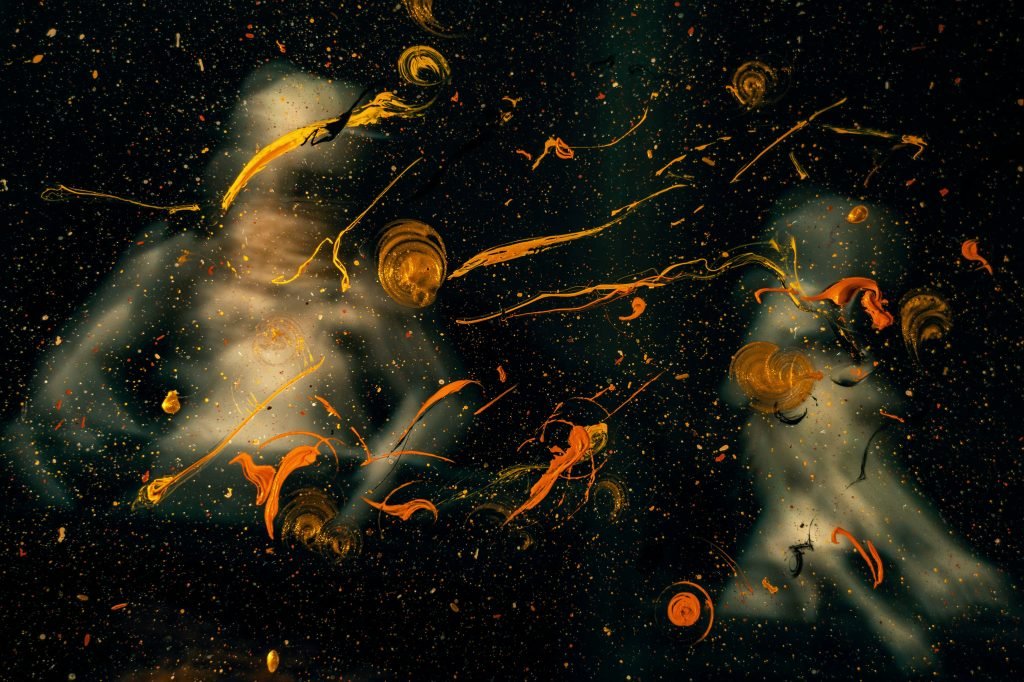
In the tapestry of human experience, the notion of a disembodied construction of reality weaves a complex pattern, reflecting the dualities of connection and isolation, presence and absence. As we venture deeper into the digital age, our lives, once firmly rooted in the tangible world, now dance on the ethereal stage of virtuality. This shift, while offering a cornucopia of knowledge and connection, also casts shadows of disconnection from the physical realm.
Imagine, if you will, a realm where the mind’s creations are as vivid and engaging as the world outside our windows. Here, in this digital dreamscape, we interact through avatars, expressions of our ideal selves, unbounded by the laws of physics or the limitations of geography. Yet, in this liberation, there lies a paradox—a yearning for touch, for the warmth of a shared glance, for the grounding sensation of earth beneath our feet. It is as if, in our ascent to the digital heavens, we have left behind a part of our essence, tethered to the physical world.
This disembodiment poses profound questions about the nature of reality itself. What is real? Is it the physical world, with its immutable laws and tactile experiences, or is it the digital universe, where our thoughts and dreams take on a life of their own? Perhaps, reality is a tapestry of both, a multidimensional space where physical and digital experiences intertwine, each enriching the other.
Yet, amidst this philosophical musing, one must not overlook the potential for dissonance. As our lives become increasingly disembodied, we risk losing touch with the elemental forces that have shaped human consciousness—the rhythmic cycle of the seasons, the profound silence of the wilderness, the simple joy of a shared meal. These experiences anchor us, reminding us of our place in the natural world, of our interconnectedness with all living beings.
In the end, the challenge and opportunity before us is to navigate this new reality with mindfulness and intention. To embrace the possibilities of the digital age while remaining rooted in the rich soil of the physical world. By weaving together the threads of the digital and the physical, we can create a reality that is not only disembodied but also deeply embodied, a reality where the mind and the senses are engaged in a harmonious dance, celebrating the full spectrum of our human experience.
Ideas
As we delve deeper into the realm of an increasingly disembodied nature of reality, let us consider the philosophical underpinnings and implications of this transformation. The digital age, with its virtual realities, artificial intelligences, and interconnected networks, has ushered in a new epoch in the human narrative, one where the lines between the physical and the metaphysical blur, creating a landscape ripe for philosophical exploration.
In the heart of this digital expanse lies the concept of “presence,” a notion traditionally anchored in physicality but now extended into the virtual. Imagine a world where one’s presence is not limited by corporeal constraints but is liberated to traverse cyberspace, to exist in multiple places simultaneously, a sort of digital omnipresence. This redefinition of presence challenges our understanding of identity, community, and even consciousness itself. Are we the sum of our digital interactions, or is there an immutable essence that remains tethered to the physical?
The philosopher Descartes, with his proposition “Cogito, ergo sum” (I think, therefore I am), might argue that the essence of our being lies in our thought, not in our physical form. In the context of a disembodied reality, this idea gains new dimensions. If our consciousness can exist independently of our physical form, within digital realms, what does this say about the nature of existence? Does it elevate the mind above the body, or does it simply extend the theater of our existential exploration?
This disembodiment also beckons us to revisit Plato’s realm of Forms, where the true essence of things exists in an abstract, non-physical realm. Could the digital age be a manifestation of this philosophical idea, a space where the pure essence of ideas and identities exists unfettered by material limitations? In this light, the digital world becomes a modern reflection of Plato’s ideal realm, offering a space for the pure actualization of concepts and the exploration of identities beyond the confines of the physical.
However, this journey into disembodiment is not without its shadows. The philosopher Martin Heidegger warned of the danger of technology distancing us from the essence of Being, from an authentic existence rooted in the world around us. As we navigate through digital landscapes, are we moving further away from Heidegger’s concept of “Being-in-the-world,” losing touch with the immediacy of our physical environment and the richness of direct human relationships?
The increasingly disembodied nature of reality invites us to balance on the tightrope between the digital and the physical, to find harmony between these realms. It challenges us to redefine what it means to be human in an age where our digital footprints may outlast our physical ones, where our interactions are mediated by screens, and where the essence of our identities can be crafted and recrafted in virtual spaces.
As we ponder these philosophical dimensions, we are called to reflect on our own place within this evolving reality. How do we maintain our grounding in the physical world while embracing the boundless possibilities of the digital? How do we forge authentic connections in an age of virtual presences?
The path forward is uncharted, a philosophical quest that invites each of us to explore, question, and ultimately find our own balance in the tapestry of existence.
Philosophies
In the grand tapestry of human thought, both Western and Eastern philosophies have threads that, either directly or indirectly, encourage a disembodied nature of reality. These threads weave through the fabric of philosophical discourse, presenting a nuanced spectrum of perspectives on the essence of existence beyond the physical.
Let’s look at Western Philosophies
In the Western tradition, the disembodied nature of reality often orbits around the realm of metaphysics and the dichotomy between mind and body. Plato stands as a monumental figure with his Theory of Forms, positing that the true essence of objects exists in an immaterial realm of perfect forms or ideas. This theory suggests a reality beyond the physical, where true knowledge and understanding reside.
René Descartes’ famous dictum “Cogito, ergo sum” (I think, therefore I am) further cements the importance of mind over matter, positing consciousness as the foundation of existence and identity. This Cartesian dualism separates the mind from the physical body, suggesting a disembodied aspect of the self that is distinct and independent from the material world.
Immanuel Kant’s critical philosophy, particularly his notions of noumena (things-in-themselves) and phenomena (things as they appear to us), implies a reality that is fundamentally inaccessible to human perception, existing beyond the empirical realm. This perspective opens up a conceptual space for disembodied realities, where the true nature of things transcends physical existence.
Now look at Eastern Philosophies
Eastern philosophies, with their rich tapestries of spiritual and philosophical traditions, often embrace a more integrated view of the disembodied nature of reality, focusing on the unity of mind, body, and spirit but still offering pathways beyond the physical.
In Hindu philosophy, the concept of Maya (illusion) suggests that the material world is a deceptive façade hiding the true, spiritual nature of reality. This worldview encourages a disembodied understanding of existence, where the ultimate goal is to transcend the physical illusions and realize one’s Atman (soul), which is identical with Brahman (universal soul or spirit).
Buddhism, with its doctrine of Anatta (no-self), challenges the very notion of a permanent, unchanging self. This philosophy suggests that what we consider the self is but a collection of changing phenomena, without any underlying essence. The Buddhist path aims at the realization of this truth, leading to liberation from the cycle of rebirth—a liberation that is disembodied in nature, as it transcends the physical existence.
Taoism, through the Tao Te Ching and other texts, advocates for harmony with the Tao (the Way), a fundamental principle that underlies and unites all things. While not disembodied in a strict sense, Taoism emphasizes the fluidity and interconnectedness of all things, suggesting a reality that goes beyond the tangible and corporeal.
Let’s look at a Synthesis
Both Western and Eastern philosophies offer visions of a reality that transcends the physical, though their approaches and emphases differ. Western thought often explores the disembodied through the lens of mind-body dualism and metaphysical speculation, seeking a rational or idealistic foundation for existence beyond the material. Eastern philosophies, in contrast, tend to focus on the experiential and spiritual dimensions of transcending the physical, emphasizing the dissolution of ego, the illusion of the material world, and the pursuit of spiritual unity.
These philosophical traditions invite us to question and expand our understanding of reality, suggesting that the essence of our existence might lie beyond the confines of the physical body. Through contemplation, meditation, and philosophical inquiry, we are encouraged to explore these disembodied aspects of reality, seeking deeper truths about ourselves and the universe.
Critiques
The philosophies that encourage a disembodied nature of reality, while offering profound insights into the nature of existence, have not been without their critiques. These critiques come from various philosophical traditions and perspectives, each offering a counterpoint to the notion of prioritizing the immaterial or disembodied aspects of reality over the physical and tangible. Let’s explore some of these critiques from both Western and Eastern contexts.
Critiques in Western Philosophy
Materialism and Physicalism: These perspectives argue against the disembodied nature of reality by asserting that everything can be explained in terms of physical processes and entities. From this viewpoint, consciousness and thought are seen as emergent properties of physical systems (like the brain), rather than indications of a separate, disembodied realm of existence.
Phenomenology: Philosophers such as Edmund Husserl and Maurice Merleau-Ponty have critiqued the disembodied perspectives through phenomenology, which emphasizes the importance of embodied experience. Merleau-Ponty, in particular, argued for the primacy of perception and the embodied nature of human existence, suggesting that consciousness is always “situated” within a physical context and cannot be fully understood apart from it.
Pragmatism: Pragmatist philosophers like William James and John Dewey critiqued the disembodied notions of reality by emphasizing the importance of practical experience and the interaction between humans and their environment. They argued that ideas and theories should be evaluated based on their practical effects and consequences, focusing on the embodied and situated nature of human life.
Critiques in Eastern Philosophy
Confucianism: While not a direct critique of disembodied philosophies, Confucianism emphasizes the importance of social relationships, moral duties, and the cultivation of virtue within the context of one’s family and society. This focus on the concrete aspects of human life offers a counterpoint to philosophies that emphasize the transcendence of the physical or social world.
Madhyamaka Buddhism: While Buddhism itself offers a perspective that could be seen as encouraging a disembodied nature of reality, the Madhyamaka school, founded by Nagarjuna, critiques any absolutist notions, including the idea of an ultimate disembodied reality. Nagarjuna’s philosophy of emptiness (śūnyatā) argues against the existence of any inherent essence, whether it be embodied or disembodied, suggesting instead that all phenomena are interdependent and lack intrinsic nature.
Contemporary Critiques
Embodied Cognition: In the realm of cognitive science and philosophy of mind, the theory of embodied cognition presents a critique of the disembodied mind by arguing that cognitive processes are deeply rooted in the body’s interactions with the world. This perspective suggests that understanding the mind requires considering it in the context of its physical embodiment and the environment.
Environmental Philosophy: Environmental philosophers critique disembodied views for disconnecting humans from the natural world, potentially leading to ecological neglect or harm. By emphasizing the interconnectedness of humans with the environment, they argue for a more embodied approach to living that recognizes the importance of the physical world for our survival and well-being.
These critiques invite a more integrated view of reality, one that acknowledges the importance of the physical, embodied existence alongside the intellectual, emotional, and spiritual dimensions of life. They challenge us to consider the full spectrum of human experience, suggesting that a rich and meaningful life is one that embraces both the tangible and the intangible, the material and the immaterial.
As we reflect on these critiques, we might find ourselves questioning how we balance the embodied and disembodied aspects of our own lives, especially in an age dominated by digital interactions and virtual realities.
Conclusion
In the quest to balance the embodied and disembodied aspects of our lives, we embark on a journey that is both ancient and quintessentially modern. This balancing act calls for a harmonious integration of our physical existence with our increasingly digital and abstract interactions. The challenge, and indeed the art, lies in navigating this integration without losing the essence of what it means to be human.
The Path of Integration
Mindful Engagement with Technology: Begin with a mindful approach to technology, recognizing it as a tool that can enhance or diminish our quality of life. It’s essential to cultivate awareness of how digital interactions affect our sense of presence and connection. By choosing to engage with technology in ways that enrich our lives rather than detract from them, we can maintain a healthy balance between the digital and the physical.
Cultivating Embodied Experiences: Make a conscious effort to engage in activities that ground you in the physical world. This could be as simple as regular walks in nature, practicing yoga or martial arts, or engaging in tactile hobbies like gardening or pottery. These activities not only reconnect us with our bodies but also remind us of the richness of the world beyond screens.
Fostering Real-World Connections: While digital platforms offer unprecedented ways to connect, they often lack the depth and nuance of face-to-face interactions. Prioritizing time with family, friends, and community in physical spaces can help counterbalance the sometimes disembodied nature of online relationships. These real-world connections anchor us in the tangible aspects of human experience, fostering empathy, understanding, and a sense of belonging.
Philosophical Reflection and Meditation: Engaging with philosophical ideas that explore the nature of reality, consciousness, and the self can provide valuable insights into our own experiences of embodiment and disembodiment. Similarly, practices like meditation can help us cultivate a deeper awareness of our minds and bodies, revealing the interconnectedness of the physical and the mental.
Creative Expression: Artistic endeavors offer powerful means to explore and express the integration of embodied and disembodied experiences. Whether through writing, painting, music, or dance, creative expression allows us to explore the nuances of our existence, bridging the gap between the tangible and the intangible.
Embracing the Duality
In the dance of life, the embodied and disembodied are not adversaries but partners, each enriching the other. The disembodied aspects of our reality—our thoughts, emotions, digital interactions—gain depth and meaning when grounded in our physical experiences. Conversely, our physical experiences are enriched and expanded by our ability to reflect, communicate, and connect in ways that transcend the limitations of time and space.
This journey towards balance is not a destination but a continuous process of adjustment and realignment. It invites us to be fully present in both the digital and physical realms, embracing the unique opportunities and challenges each presents.
As we navigate this balance, we may find that the question is not how to choose between the embodied and disembodied, but rather how to weave them together into a tapestry that reflects the fullness of our human experience.