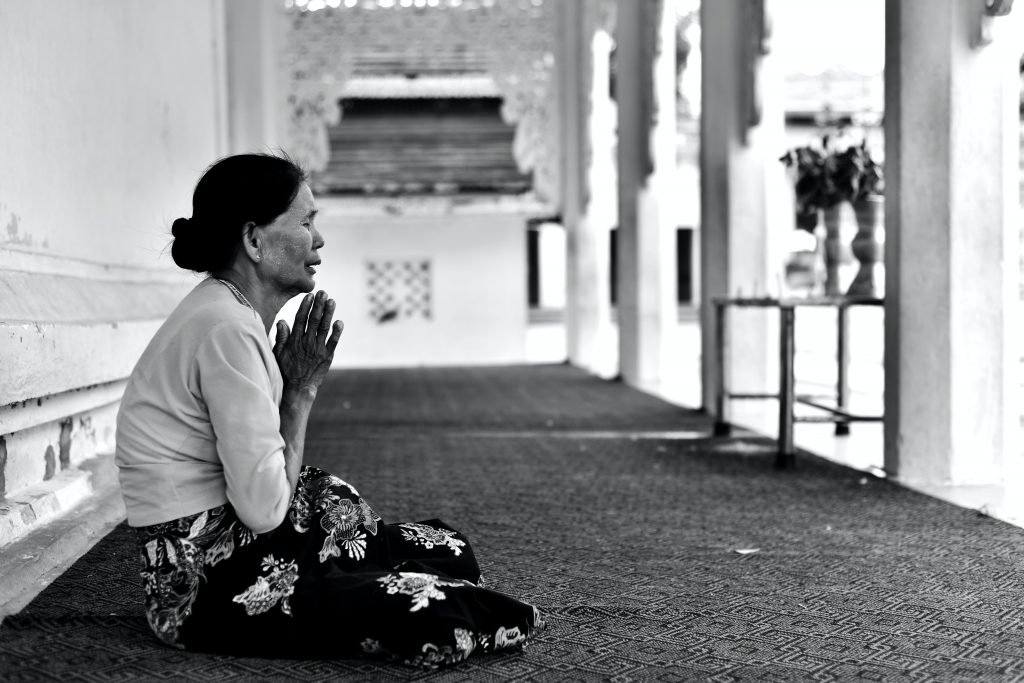
Purpose of sādhana-bhakti (practice)
By regularly rendering devotional service, one gradually becomes attached to the Supreme Personality of Godhead. When that attachment is intensified, it becomes love of Godhead.
CC 19.177
The process of devotional service — beginning with chanting and hearing — is called sādhana-bhakti. This includes the regulative principles that are intended to awaken one to devotional service. Devotional service is always dormant in everyone’s heart, and by the offenseless chanting of the holy names of the Lord, one’s original dormant Kṛṣṇa [God] consciousness is awakened. This awakening to Kṛṣṇa consciousness is the beginning of sādhana-bhakti. This can be divided into many different parts, including faith, association with devotees, initiation by the spiritual master, engagement in devotional service under the instructions of a spiritual master, steadiness in devotional service and the awakening of a taste for devotional service. In this way, one can become attached to Kṛṣṇa and His service, and when this attachment is intensified, it results in ecstatic love for Kṛṣṇa. The word rati is explained in the Bhakti-rasāmṛta-sindhu (1.3.41) as follows:
vyaktaṁ masṛṇatevāntar-
lakṣyate rati-lakṣaṇam
mumukṣu-prabhṛtīnāṁ ced
bhaved eṣā ratir na hi
“When a tenderness of the heart is manifested, there is rati, or attachment. But those who are [only] interested in being liberated from material bondage will not manifest this tenderness.” This attachment is not like material attachment. When one is free of material contamination, attachment for Kṛṣṇa’s service awakens and is called rati. In the material world there is attachment for material enjoyment, but this is not rati. Transcendental rati can be awakened only on the spiritual platform. Ecstatic love for Kṛṣṇa (prema) is described in the Bhakti-rasāmṛta-sindhu (1.41) as follows:
samyaṅ masṛṇita-svānto
mamatvātiśayāṅkitaḥ
bhāvaḥ sa eva sāndrātmā
budhaiḥ premā nigadyate
“When the heart is completely softened and devoid of all material desires and when one’s emotional feelings become very strong, one becomes very much attached to Kṛṣṇa. Such purified emotion is known as pure love.”
4:30-6:00 Gratitude, Meditation & Yoga
The following songs and texts start the day in gratitude (mangala-ārati).
Śrī Gurvaṣṭakam
Verse 1
saḿsāra-dāvānala-līḍha-loka-
trāṇāya kāruṇya-ghanāghanatvam
prāptasya kalyāṇa-guṇārṇavasya
vande guroḥ śrī-caraṇāravindam
The spiritual master is receiving benediction from the ocean of mercy. Just as a cloud pours water on a forest fire to extinguish it, so the spiritual master delivers the materially afflicted world by extinguishing the blazing fire of material existence. I offer my respectful obeisances unto the lotus feet of such a spiritual master, who is an ocean of auspicious qualities.
Verse 2
mahāprabhoḥ kīrtana-nṛtya-gīta-
vāditra-mādyan-manaso rasena
romāñca-kampāśru-tarańga-bhājo
vande guroḥ śrī-caraṇāravindam
Chanting the holy name, dancing in ecstasy, singing, and playing musical instruments, the spiritual master is always gladdened by the sankirtana movement of Lord Caitanya Mahaprabhu. Because he is relishing the mellows of pure devotion within his mind, sometimes his hair stands on end, he feels quivering in his body, and tears flow from his eyes like waves. I offer my respectful obeisances unto the lotus feet of such a spiritual master.
Verse 3
śrī-vigrahārādhana-nitya-nānā-
śṛńgāra-tan-mandira-mārjanādau
yuktasya bhaktāḿś ca niyuñjato 'pi
vande guroḥ śrī-caraṇāravindam
The spiritual master is always engaged in the temple worship of Sri Sri Radha and Krsna. He also engages his disciples in such worship. They dress the Deities in beautiful clothes and ornaments, clean the temple, and perform other similar worship of the Lord. I offer my respectful obeisances unto the lotus feet of such a spiritual master.
Verse 4
catur-vidha-śrī-bhagavat-prasāda-
svādv-anna-tṛptān hari-bhakta-sańghān
kṛtvaiva tṛptiḿ bhajataḥ sadaiva
vande guroḥ śrī-caraṇāravindam
The spiritual master is always offering Krsna four kinds of delicious food [analyzed as that which is licked, chewed, drunk, and sucked]. When the spiritual master sees that the devotees are satisfied by eating bhagavat-prasada, he is satisfied. I offer my respectful obeisances unto the lotus feet of such a spiritual master.
Verse 5
śrī-rādhikā-mādhavayor apāra-
mādhurya-līlā guṇa-rūpa-nāmnām
prati-kṣaṇāsvādana-lolupasya
vande guroḥ śrī-caraṇāravindam
The spiritual master is always eager to hear and chant about the unlimited conjugal pastimes of Radhika and Madhava, and Their qualities, names, and forms. The spiritual master aspires to relish these at every moment. I offer my respectful obeisances unto the lotus feet of such a spiritual master.
Verse 6
nikuñja-yūno rati-keli-siddhyai
yā yālibhir yuktir apekṣaṇīyā
tatrāti-dākṣyād ati-vallabhasya
vande guroḥ śrī-caraṇāravindam
The spiritual master is very dear, because he is expert in assisting the gopis, who at different times make different tasteful arrangements for the perfection of Radha and Krsna’s conjugal loving affairs within the groves of Vrndavana. I offer my most humble obeisances unto the lotus feet of such a spiritual master.
Verse 7
sākṣād-dharitvena samasta-śāstrair
uktas tathā bhāvyata eva sadbhiḥ
kintu prabhor yaḥ priya eva tasya
vande guroḥ śrī-caraṇāravindam
The spiritual master is to be honored as much as the Supreme Lord, because he is the most confidential servitor of the Lord. This is acknowledged in all revealed scriptures and followed by all authorities. Therefore I offer my respectful obeisances unto the lotus feet of such a spiritual master, who is a bonafide representative of Sri Hari [Krsna].
Verse 8
yasya prasādād bhagavat-prasādo
yasyāprasādān na gatiḥ kuto 'pi
dhyāyan stuvaḿs tasya yaśas |
tri-sandhyaḿ
vande guroḥ śrī-caraṇāravindam
By the mercy of the spiritual master one receives the benediction of Krsna. Without the grace of the spiritual master, one cannot make any advancement. Therefore, I should always remember and praise the spiritual master. At least three times a day I should offer my respectful obeisances unto the lotus feet of my spiritual master.
Šri Tulasi pranama
vṛndāyai tulasī-devyai
priyāyai keśavasya ca
kṛṣṇa-bhakti-prade devi
satyavatyai namo namaḥ
I offer my repeated obeisances unto Vrnda, Srimati Tulasi Devi, who is very dear to Lord Kesava. O goddess, you bestow devotional service to Lord Krsna and possess the highest truth.
Śrī Tulasī-pūjā-kīrtana
Verse 1
(namo namaḥ)
tulasī kṛṣṇa-preyasi
namo namaḥ
rādhā-kṛṣṇa-sevā pābo
ei abilāṣī
O Tulasi, beloved of Krsna, I bow before you again and again. My desire is to obtain the service of Sri Sri Radha-Krsna.
Verse 2
ye tomāra śaraṇa loy
tara vāñchā pūrṇa hoy
kṛpā kori' koro
tāre vṛndāvana-vāsi
Whoever takes shelter of you has his wishes fulfilled. Bestowing your mercy on him, you make him a resident of Vrndavana.
Verse 3
mora ei abhilāṣa
vilāsa kuñje dio vāsa
nayana heribo sadā
yugala-rūpa-rāśi
My desire is that you will also grant me a residence in the pleasure groves of Sri Vrndavana-dhama. Thus, within my vision I will always behold the beautiful pastimes of Radha and Krsna.
Verse 4
ei nivedana dhara
sakhīra anugata koro
sevā-adhikāra diye
koro nīja dāsī
I beg you to make me a follower of the cowherd damsels of Vraja. Please give me the privilege of devotional service and make me your own maidservant.
Verse 5
dīna kṛṣṇa-dāse koy
ei yena mora hoy
śrī-rādhā-govinda-preme
sadā yena bhāsi
This very fallen and lowly servant of Krsna prays, ”May I always swim in the love of Sri Radha and Govinda.
Śrī Tulasī Pradakṣiṇa Mantra
yāni kāni ca pāpāni
brahma-hatyādikāni ca
tāni tāni praṇaśyanti
pradakṣiṇaḥ pade pade
By the circumambulation of Srimati Tulasi Devi all the sins that one may have committed are destroyed at every step, even the sin of killing a brahmana.
Vaisnava Pranams
vancha-kalpatarubhyash cha
kripa-sindhubhya eva cha
patitanam pavanebhyo
vaishnavebhyo namo namaha
I offer my respectful obeisances unto the Vaishnava devotees of the Lord. They are just like desire trees and can fulfill the desires of everyone, and they are full of compassion for the fallen conditioned souls.
Meditation (japa)
Chanting a mantra or hymn softly and slowly is called japa, and chanting the same mantra loudly is called kīrtana. For example, uttering the mahā-mantra (Hare Kṛṣṇa, Hare Kṛṣṇa, Kṛṣṇa Kṛṣṇa, Hare Hare/ Hare Rāma, Hare Rāma, Rāma Rāma, Hare Hare) very softly, only for one’s own hearing, is called japa. Chanting the same mantra loudly for being heard by all others is called kīrtana. The mahā-mantra can be used for japa and kīrtana also. When japa is practiced it is for the personal benefit of the chanter, but when kīrtana is performed it is for the benefit of all others who may hear. In the Padma Purāṇa there is a statement: “For any person who is chanting the holy name either softly or loudly, the paths to liberation and even heavenly happiness are at once open.” [The Nectar of Devotion, Ch. 9]
In the Narada Pancaratra it is stated that all the Vedic rituals, Mantras and understanding are compressed into the eight words; Hare Krishna, Hare Krishna, Krishna Krishna, Hare Hare. Similarly, in the Kalisantra Upanisad it is stated that these sixteen words Hare Krishna, Hare Krishna, Krishna Krishna, Hare Hare, Hare Rama, Hare Rama, Rama Rama, Hare Hare are especially meant for counteracting the degrading and contaminating influence of this materialistic age of Kali. … The Vedas aim at the inculcation of pure love of God only, and this harmonized conclusion is practically realized by the Krishna Consciousness Movement or chanting Hare Krishna Mantra. [Letter to Professor J. F. Staal, Jan. 30, 1970, Los Angeles]
Question: Sir, may I know the meaning of the divine name Hare Kṛṣṇa and Hare Rāma? The real meaning of the divine name Hare Kṛṣṇa, Hare Rāma?
Prabhupāda: Meaning is very simple. The Hare, it is addressing, sambodhana. Just like we ask somebody, “Hello, Mr. such and such.” It is like that, Harā. Harā is the energy of the Supreme Lord. Supreme Lord is Hari, and Harā is the energy, potency. So we are addressing harā—“Hare.” And “Kṛṣṇa,” that is also addressing Nara, Kṛṣṇa. So we are praying: “O the energy of the Lord, O Your Lordship, kindly engage us in Your service.” [Room Conversation, Jan. 19, 1977, Bhubaneswar]
6:00-12:00 Snack, Lecture & Work
Morning Snack
Indulge in the glorious leftovers of the morning snack for the deities.
Śrī Guru-vandanā
Verse 1
śrī-guru-caraṇa-padma |
kevala-bhakati-sadma
bando mui sāvadhāna mate
jāhāra prasāde bhāi |
e bhava toriyā jāi
kṛṣṇa-prāpti hoy jāhā ha'te
The lotus feet of our spiritual master are the abode of pure devotional service. I bow down to his lotus feet with great care and attention. My dear brothers! It is through the grace of our spiritual master that we can cross over this material existence and attain Krishna.
Verse 2
guru-mukha-padma-vākya |
cittete koriyā aikya
ār nā koriho mane āśā
śrī-guru-caraṇe rati |
ei se uttama-gati
je prasāde pūre sarva āśā
Make the teachings emanating from the lotus mouth of our spiritual master one with your heart, and do not desire anything else. Attachment to his lotus feet is the best way to make spiritual advancement. His mercy fulfills all desires for spiritual perfection.
Verse 3
cakhu-dān dilo jei |
janme janme prabhu sei
divya jñān hṛde prokāśito
prema-bhakti jāhā hoite |
avidyā vināśa jāte
vede gāy jāhāra carito
He who has given us the gift of transcendental vision is our lord, birth after birth. It is by his mercy that divine knowledge is revealed within our hearts, bestowing pure love for Krishna and destroying ignorance. The Vedic scriptures sing of his character.
Verse 4
śrī-guru karuṇā-sindhu |
adhama janāra bandhu
lokanāth lokera jīvana
hā hā prabhu koro doyā |
deho more pada-chāyā,
ebe jaśa ghuṣuk tribhuvana
O spiritual master, O ocean of mercy and friend of the fallen! O universal teacher and life of all people! Be merciful unto us, O master, and give us the shade of your lotus feet. May your glories now be proclaimed throughout the three worlds.
Śrīla Prabhupāda Praṇati
Verse 1
nama oṁ viṣṇu pādāya
kṛṣṇa preṣṭhāya bhū-tale
śrīmate bhaktivedānta
svāmin iti nāmine
I offer my respectful obeisances unto His Divine Grace A.C. Bhaktivedanta Swami Prabhupada, who is very dear to Lord Krsna, having taken shelter at His lotus feet.
Verse 2
namas te sārasvate deve
gaura-vāṇī-pracāriṇe
nirviśeṣa-śūnyavādi-
pāścātya-deśa-tāriṇe
Our respectful obeisances are unto you, O spiritual master, servant of Bhaktisiddhanta Sarasvati Goswami. You are kindly preaching the message of Lord Caitanya and delivering the Western countries, which are filled with impersonalism and voidism.
Mańgalācaraṇa, Pañca-tattva Praṇāma & Hare Kṛṣṇa Mahā-mantra
Mańgalācaraṇa
vande 'haḿ śrī-guroḥ
śrī-yuta-pada-kamalaḿ
śrī-gurun vaiṣṇavāḿś ca
śrī-rūpaḿ sāgrajātaḿ
saha-gaṇa-raghunāthānvitaḿ
taḿ sa jīvam
sādvaitaḿ sāvadhūtaḿ
parijana-sahitaḿ
kṛṣṇa-caitanya-devaḿ
śrī-rādhā-kṛṣṇa-pādān
saha-gaṇa-lalitā-
śrī-viśākhānvitāḿś ca
I offer my respectful obeisances unto the lotus feet of my spiritual master and of all the other preceptors on the path of devotional service. I offer my respectful obeisances unto all the Vaiṣṇavas and unto the six Gosvāmīs, including Srīla Rūpa Gosvāmī, Srīla Sanātana Gosvāmī, Raghunātha dāsa Gosvāmī, Jīva Gosvāmī, and their associates. I offer my respectful obeisances unto Advaita Acārya Prabhu, Srī Nityānanda Prabhu, Srī Caitanya Mahāprabhu, and all His devotees, headed by Srīvāsa Thākura. I then offer my respectful obeisances unto the lotus feet of Lord Kṛṣṇa, Srīmatī Rādhārānī, and all the gopīs, headed by Lalitā and Viśākhā.
Śrī Pañca-tattva mantra
(jaya) śrī-kṛṣṇa-caitanya |
prabhu nityānanda
śrī-advaita gadādhara|
śrīvāsādi-gaura-bhakta-vṛnda
I offer my respectful obeisances unto Sri Caitanya Mahaprabhu, Lord Nityananda, Sri Advaita, Gadadhara Pandit, Srivas Thakur, and all the devotees of Lord Caitanya.
Hare Kṛṣṇa Mahā-mantra
hare kṛṣṇa hare kṛṣṇa
kṛṣṇa kṛṣṇa hare hare
hare rāma hare rāma
rāma rāma hare hare
My dear Lord, and the spiritual energy of the Lord, kindly engage me in Your service. I am now embarrassed with this material service. Please engage me in Your service.
Jaya Rādhā-Mādhava
Verse 1
jaya rādhā-mādhava
kuñja-bihārī
gopī-jana-vallabha
giri-vara-dhārī
Krsna is the lover of Radha. He displays many amorous pastimes in the groves of Vrndavana, He is the lover of the cowherd maidens of Vraja, and the holder of the great hill named Govardhana.
Verse 2
jaya yaśodā-nandana
vraja-jana-rañjana
vraja-jana-rañjana
yāmuna-tīra-vana-cārī
(jaya kuñja-bihārī)
He is the beloved son of mother Yasoda, the delighter of the inhabitants of Vraja, and He wanders in the forests along the banks of the River Yamuna!
Lecture
Study ancient wisdom whose core ideas are as relevant today as they were thousands of years ago when they were first recited.
Work
Follow your dharma.
12:00-18:00 Lunch Prasadam & Work
Prasāda Prayer
A person who honors the prasāda and regularly eats it … immediately can achieve the results of the pious activities that are obtained through ten thousand performances of sacrificial rites. [The Nectar of Devotion, Ch. 9]
Verse 1 (CC Madhya 11.209)
mahā-prasāde govinde
nāma-brahmaṇi vaiṣṇave
sv-alpa-puṇya-vatāṁ rājan
viśvāso naiva jāyate
For those who have amassed very few pious activities, their faith in maha-prasad, in Sri Govinda, in the Holy Name and in the Vaishnavas is never born. [CC Madhya 11.209 – Purport]
Verse 2
śarīra avidyā-jāl |
joḍendriya tāhe kāl
jīve phele viṣaya-sāgore
tā'ra madhye jihvā ati |
lobhamoy sudurmati
tā'ke jetā kaṭhina saṁsāre
O Lord, this material body is a lump of ignorance, and the senses are a network of paths leading to death. Somehow or other we have fallen into the ocean of material sense enjoyment, and of all the senses the tongue is the most voracious and uncontrollable. It is very difficult to conquer the tongue in this world. [Śrīmad-Bhāgavatam 5.6.2 – Purport]
Verse 3
kṛṣṇa baro doyāmoy |
koribāre jihvā jay
swa-prasād-anna dilo bhāi
sei prasādānna pāo |
rādhā-kṛṣṇa-guṇa gāo
preme ḍāko caitanya-nitāi
But You, dear Lord Kṛṣṇa, are very kind to us. You have given us this nice prasādam just to control the tongue. So now let us take this prasādam to our full satisfaction and glorify Their Lordships Śrī Śrī Radha and Kṛṣṇa, and in love call for the help of Lord Caitanya and Prabhu Nityānanda. [Śrīmad-Bhāgavatam 5.6.2 – Purport]
Work
Follow your dharma.
18:00-21:00 Gratitude & Kīrtana
The following songs end the day in gratitude (gaura-ārati).
Jaya Jagadisha Hare (Sri Dasavatara-stotra)
Śrī Gaura-ārati (Kiba Jaya Jaya)
Verse 1
(kiba) jaya jaya gorācāńder |
āratiko śobhā
jāhnavī-taṭa-vane |
jaga-jana-mana-lobhā
jaga-jana-mana-lobhā

Refrain 1
gaurāńger ārotik śobhā |
jaga-janer-mana-lobhā
All glories, all glories to the beautiful arati ceremony of Lord Caitanya. This Gaura-arati is taking place in a grove on the banks of the Jahnavi (Ganges) and is attracting the minds of all living entities in the universe.
Refrain 1: The splendor of Lord Gauranga’s (Caitanya) arati attracts the minds of all living entities of the universe!
Verse 2
(kiba) dakhiṇe nitāicāńd |
bāme gadādhara
nikaṭe advaita |
śrīnivāsa chatra-dhara
On Lord Caitanya’s right side is Lord Nityananda and on His left is Sri Gadadhara. Nearby stands Sri Advaita, and Srivasa Thakura is holding an umbrella over Lord Caitanya’s head.
Verse 3
(kiba) bosiyāche gorācāńd |
ratna-siḿhāsane
ārati koren brahmā- |
ādi deva-gaṇe
Lord Caitanya has sat down on a jeweled throne, and the demigods, headed by Lord Brahma, perform the arati ceremony.
Verse 4
(kiba) narahari-ādi kori' |
cāmara dhulāya
sañjaya-mukunda-bāsu- |
ghoṣ-ādi gāya
Narahari Sarakara and other associates of Lord Caitanya fan Him with camaras, and devotees headed by Sanjaya Pandita, Mukunda Datta, and Vasu Ghosa sing sweet kirtana.
Verse 5
(kiba) śańkha bāje ghaṇṭā bāje |
bāje karatāla
madhura mṛdańga bāje |
parama rasāla

Refrain 2
śankha bāje ghaṇṭā bāje |
madhur madhur madhur bāje
Conchshells, bells, and karatalas resound, and the mrdangas play very sweetly. This kirtana music is supremely sweet and relish able to hear.
Refrain 2: Conchsells resound! Bells resound! Sweetness, sweetness, and sweetness resounds!
Verse 6
bahu-koṭi candra jini' |
vadana ujjvala
gala-deśe bana-mālā |
kore jhalamala
The brilliance of Lord Caitanya’s face conquers millions upon millions of moons, and the garland of forest flowers around His neck shines.
Verse 7
śiva-śuka-nārada |
preme gada-gada
bhakativinoda dekhe |
gorāra sampada
Lord Siva, Sukadeva Gosvami, and Narada Muni are all there, and their voices are choked with the ecstasy of transcendental love. Thus Thakura Bhaktivinoda envisions the glory of Lord Sri Caitanya.
Prema-dhvani
Prayer
- jaya oṁ viṣṇu-pāda paramahaṁsa parivrājakācārya aṣṭottara-śata Śrī Śrīmad His Divine grace A C Bhaktivedānta Svāmī Prabhupāda — kī Jaya!
- ISKCON founder ācārya Śrīla Prabhupāda — kī Jaya!
- jaya oṁ viṣṇu-pāda paramahaṁsa parivrājakācārya aṣṭottara-śata Śrī Śrīmad His Divine grace Bhaktisiddhānta Sarasvatī ṭhākura Śrīla Prabhupāda — kī Jaya!
- jaya om viṣṇu-pāda Śrīla Gaurakiśora dāsa bābājī mahārāja — kī Jaya!
- jaya oṁ viṣṇu-pāda Śrīla Saccidānanda bhaktivinoda ṭhākura — kī Jaya!
- jaya oṁ viṣṇu-pāda vaiṣṇava-sārvabhauma Śrīla Jagannātha dāsa bābājī mahārāja — kī Jaya!
- jaya Śrī Rupa, Sanātana, Bhaṭṭa Raghunātha, Śrī Jīva, Gopāla Bhaṭṭa, Dāsa Raghunātha, Sad-Gosvāmi prabhu — kī Jaya!
- nāmācārya Śrīla haridāsa ṭhākura — kī Jaya!
- prem-se kaho Śrī-kṛṣṇa-caitanya prabhu nityānanda, Śrī advaita, gadādhara, Śrīvāsādi gaura-bhakta-vṛnda — kī Jaya!
- Śrī Śrī Rādha-Kṛṣṇa, Gopa-Gopīnatha, śyāma-kuṇḍa, rādhā-kuṇḍa giri-govardhana — kī Jaya!
- Śrī māyāpur-dhāma — kī Jaya!
- Śrī vṛndāvana-dhāma — kī Jaya!
- gaṅgā-mayī — kī Jaya!
- yamunā-mayī — kī Jaya!
- bhakti-devī — kī Jaya!
- tulasī-devī — kī Jaya!
- Ananta koṭi vaiṣṇava-vṛnda — kī Jaya!
- Śrī hari-nāma saṅkīrtana — kī Jaya!
- Grantha-rāja śrīmad bhāgavatam — kī Jaya!
- ISKCON-vartmāna-guru-vṛnda — kī Jaya!
- samāveta bhakta-vṛnda — kī Jaya!
- Gaura-premānande hari — haribol!
- All glories to the assembled devotees — Hare Kṛṣṇa! (3x)
- All glories to Śrī Guru and Śrī Gaurāṅga!
- All glories to Śrīla Prabhupāda!
Translation
- All glories to the acarya Om Vishnupada 108 Tridandi Goswami A.C. [Abhay Caranāravinda] Bhaktivedanta Swami Prabhupada, who travels across the earth preaching the glories of Hari and who is situated on the highest platform of sannyasa, the renounced order of life — kī Jaya!
- All glories to ISKCON founder acarya Srīla Prabhupada — kī Jaya!
- All glories to the acarya Om Vishnupada 108 Tridandi Goswami His Divine Grace Bhaktisiddhanta Sarasvati Prabhupada, who travels across the earth, preaching the glories of Hari, and who is situated on the highest platform of sannyasa — kī Jaya!
- All glories to the acarya Om Vishnupada Śrīla Gaurakiśora Dāsa Bābājī Mahārāja — kī Jaya!
- All glories to the acarya Om Vishnupada Śrīla Saccidānanda Bhaktivinoda Thākura — kī Jaya!
- All glories to the acarya Om Vishnupada Śrīla Jagannātha dāsa bābājī mahārāja — kī Jaya!
- All glories to Śrī Rupa, Sanātana, Bhaṭṭa Raghunātha, Śrī Jīva, Gopāla Bhaṭṭa, Dāsa Raghunātha, Sad-Gosvāmi prabhu — kī Jaya!
- All glories to the Nama-acarya, Srila Haridasa Thakura — kī Jaya!
- Call out with love the names of Sri Krishna Caitanya, Prabhu Nityananda, Sri Advaita, Gadadhara, and all the devotees of Lord Caitanya, headed by Srivasa Thakura — kī Jaya!
- All glories to Radha and Krishna, the cowherd boys of Vrindavana, Krishna as the master of the cowherd girls, Krishna’s and Radha’s bathing ponds (Syama-kunda and Radha-kunda), and the sacred Govardhana Hill — kī Jaya!
- All glories to Śrī Māyāpur-dhāma — kī Jaya!
- All glories to the abodes Śrī Vṛndāvana-dhāma — kī Jaya!
- All glories to the Ganges River — kī Jaya!
- All glories to the Yamuna River — kī Jaya!
- All glories to Bhakti-devi, the goddess of devotion — kī Jaya!
- All glories to the sacred tulasi plant — kī Jaya!
- All glories to the unlimited millions of devotees of Lord Krishna — kī Jaya!
- All glories to the congregational chanting of the holy name of Hari — kī Jaya!
- Grantha-rāja śrīmad bhāgavatam — kī Jaya!
- ISKCON-vartmāna-guru-vṛnda — kī Jaya!
- All glories to the assembled devotees — kī Jaya!
- Chant the names of the Lord in the ecstasy of love for Lord Caitanya — Haribol!
- All glories to the assembled devotees — Hare Kṛṣṇa! (3x)
- All glories to Śrī Guru and Śrī Gaurāṅga!
- All glories to Śrīla Prabhupāda!
Nṛsiḿhaḥ Pranāma
Verse 1
namas te narasiḿhāya
prahlādāhlāda-dāyine
hiraṇyakaśipor vakṣaḥ-
śilā-ṭańka-nakhālaye
I offer my obeisances to Lord Narasimha, who gives joy to Prahlada Maharaja and whose nails are like chisels on the stone like chest of the demon Hiranyakasipu.
Verse 2
ito nṛsiḿhaḥ parato nṛsiḿho
yato yato yāmi tato nṛsiḿhaḥ
bahir nṛsiḿho hṛdaye nṛsiḿho
nṛsiḿham ādiḿ śaraṇaḿ prapadye
Lord Nrsimha is here and also there. Wherever I go Lord Nrsimha is there. He is in the heart and is outside as well. I surrender to Lord Nrsimha, the origin of all things and the supreme refuge.
Verse 3
tava kara-kamala-vare
└nakham adbhuta-śṛńgaḿ
dalita-hiraṇyakaśipu-
└tanu-bhṛńgam
keśava dhṛta-narahari-rūpa
└jaya jagadīśa hare
O Kesava! O Lord of the universe! O Lord Hari, who have assumed the form of half-man, half-lionl All glories to You! Just as one can easily crush a wasp between one’s fingernails, so in the same way the body of the wasp like demon Hiranyakasipu has been ripped apart by the wonderful pointed nails on Your beautiful lotus hands.
Kīrtana
When a person loudly chants the glories of the Lord’s activities, qualities, form, etc., his chanting is called saṅkīrtana. Saṅkīrtana also refers to the congregational chanting of the holy name of the Lord. … In the First Canto, fifth chapter, verse 22 of Śrīmad-Bhāgavatam, Nārada Muni tells his disciple Vyāsadeva, “My dear Vyāsa, you should know that persons who are engaged in executing austerities and penances, studying the Vedas, performing big sacrifices, chanting the hymns of the Vedas, speculating on transcendental knowledge and performing charitable functions have for all their auspicious activities simply to gain a place in the association of devotees and chant the glories of the Lord.” It is indicated here that chanting about and glorifying the Lord is the ultimate activity of the living entity. [The Nectar of Devotion, Ch. 9]
The article [in The East Village Other, Vol. 1 Iss. 22] described the evening kīrtanas, quoted from Prabhupāda’s lecture, and mentioned “a rhythmic, hypnotic sixteen-word chant, Hare Krishna Hare Krishna Krishna Krishna Hare Hare Hare Rama Hare Rama Rama Rama Hare Hare, sung for hours on end to the accompaniment of hand clapping, cymbals, and bells.” Swamiji said that simply because the mantra was there, the article was perfect. … Allen and Peter had come for the kīrtana, but it wasn’t quite time – Prabhupāda hadn’t come down. They presented a new harmonium to the devotees. “It’s for the kīrtanas,” said Allen. “A little donation.” … Allen and Peter sat with the congregation and joined in the kīrtana. Allen played harmonium. [Śrīla Prabhupāda-līlāmṛta, Vol. Ch. 20]